
24 hour rule: spend less impulsively without a harsh budget
The 24 hour rule gives non-essential spending a cooling-off period, making wishes, triggers and cashflow visible before checkout.
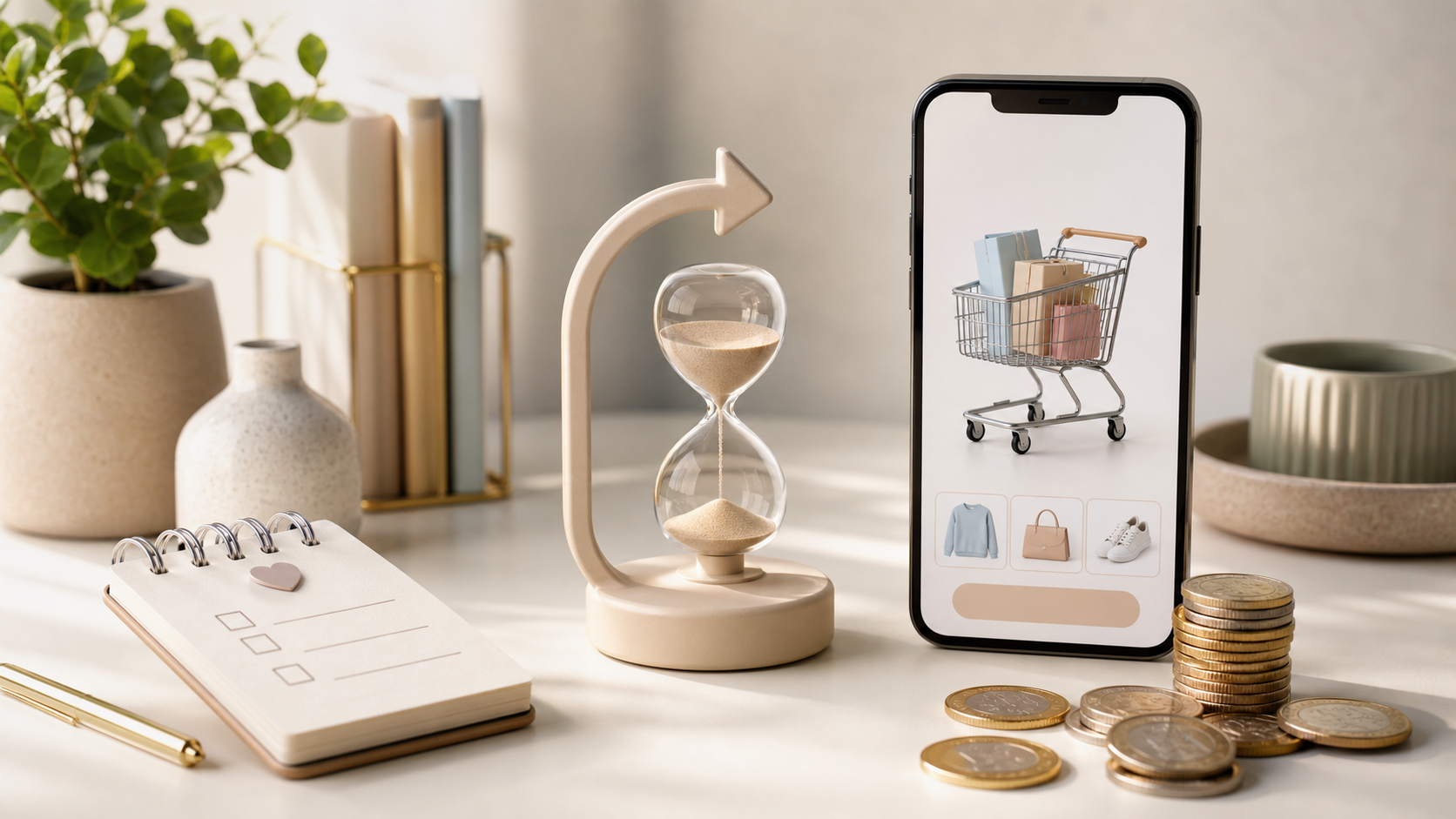
The 24 hour rule makes buying less automatic
The 24 hour rule is simple: a non-essential purchase does not happen immediately. It waits on a list for a day, and only then do you decide again. The 24 hour rule is not punishment and it is not a ban on enjoyment. It is a small delay between the trigger and the payment.
That delay matters because many purchases do not start as a calm decision. They start with a discount, tiredness, boredom, a notification, a full basket or the feeling that an offer is about to disappear. Wijzer in geldzaken warns against impulse purchases and recommends asking whether you really need something and whether you can postpone it.
Nibud connects saving money with overview, goals and practical choices. That fits the 24 hour rule. You do not need to defeat every temptation through willpower. You create a rule that moves the purchase out of the emotional moment and back into the monthly plan.
What counts as non-essential?
The 24 hour rule only works when you define its scope first. Rent, health insurance, energy, basic groceries, medicine, school costs, necessary repairs and work equipment are not the place for delay when they are genuinely needed. That is not what the 24 hour rule is for.
Non-essential means the purchase can wait without an immediate problem. Think of clothing when enough clothing is available, extra home decoration, gadgets, games, cosmetics, snacks outside normal groceries, upgrades, accessories, offers and items that mainly solve the feeling of the moment.
Make the boundary practical. A household might say that every unplanned purchase above 25 euro waits 24 hours. Or that online baskets are never checked out the same evening. A concrete boundary makes the 24 hour rule less dependent on mood.
Put the wish on a list, not in the basket
A wish list is the centre of the 24 hour rule. The purchase does not disappear; it moves. Write down the product, price, date, reason and link if needed. Then remove the product from the shopping basket. That last step matters because a filled basket keeps pulling.
The wish list gives two kinds of information. First, after one day you see whether the wish still exists. Many small temptations lose force when the discount, screen or mood has passed. Second, you see patterns. Impulses may show up after work, on Sunday evening, after payday or while scrolling.
Use a separate category in FlowyZ for wishes or non-essential spending. Then the 24 hour rule gets a place in cashflow. A wish is not automatically wrong, but it must compete with other choices in the same month. Read cashflow planning vs budgeting if you want the 24 hour rule to sit next to fixed bills and weekly room.
Notice the impulse triggers
The 24 hour rule becomes stronger when you also write down the trigger. Was it a sale? Free delivery? An influencer? A bad day? A child asking for something? A shop you did not need to visit? CFPB learning material defines an impulse purchase as buying without a prior plan, with the risk of spending more than you can afford.
Triggers are not character flaws. They are design and context. Webshops use scarcity, bundles, countdown feelings and easy payment routes. Physical shops use routes, checkout products and offers. The 24 hour rule makes that context visible before money leaves.
Then choose a counter-rule for each trigger. For sales: buy only if the item was already on the list before the sale. For tiredness: no shopping after 9 p.m. For free delivery: do not add items just to reach a threshold. For social pressure: check the monthly plan first.
Create purchase rules that fit your home
A good 24 hour rule is domestic, not theoretical. For a family, the rule may be that each adult has a personal free amount while larger wishes are discussed together. For someone living alone, the rule may be that every purchase above a threshold is first planned in FlowyZ.
Use three amounts. Below the low threshold, a purchase can happen immediately if it fits the weekly budget. Between the low and high threshold, the 24 hour rule applies. Above the high threshold, use a longer pause, such as seven days or the next household money meeting.
The amounts need to fit income, fixed costs and the buffer. A 50 euro threshold is small for one household and large for another. Nibud stresses that concrete goals and automatic behaviour help with saving. The same is true here: the rule must fit your real room.
After 24 hours, ask more than do I want this?
After a day comes the real decision. Do not only ask whether you still want it. Ask what job the product will have. Does it replace something broken? Does it solve a recurring problem? Will it be used often? Does it fit the home? Does it bring maintenance, subscriptions or refills?
Then ask the money questions. Is the amount in the monthly plan? Which other wish moves back? Does the buffer drop? Is another annual bill still coming this month? Is second-hand, borrowing, repairing or waiting cheaper? Wijzer in geldzaken names postponing and second-hand buying as ways to lower impulse pressure.
If the answer is still yes, buying can be fine. The 24 hour rule is not a shopping ban. The difference is that the purchase has become a chosen expense, not only a reaction to yesterday's trigger. Used this way, the 24 hour rule becomes a decision aid instead of a harsh budget label.
Do not use the 24 hour rule for real need
Some people make rules so strict that they backfire. The 24 hour rule should not mean unnecessarily delaying necessary shoes for a child, a broken washing machine or a medical device. Then the rule becomes stress.
Create exceptions in advance. Necessary replacement can happen immediately when the problem is real. Safety, health and work continuity come first. Small daily choices inside an agreed free amount also do not need to enter the wish list every time.
The strength of the 24 hour rule sits in the middle area: purchases that are pleasant but not urgent. That is where one day can change the decision. A household with clear exceptions keeps the rule longer.
Watch buy-now-pay-later and fragmented choices
Buy-now-pay-later, instalments and scattered small orders can undermine the 24 hour rule. The purchase feels lighter because payment comes later or in pieces. But the month still receives the obligation. Across several shops, the overview disappears quickly.
Put buy-now-pay-later purchases on the wish list too. If you would not want to pay it from this month's available room today, paying later is not a solution. It only moves pressure to a future week.
FlowyZ is practical here. Plan the payment on the real payment date, not only the purchase date. Then you see whether the delayed payment collides with rent, energy, insurance or groceries. The 24 hour rule keeps payment convenience from overruling the plan.
Make the environment less tempting
A rule works better when the environment supports it. Remove shopping apps you open mainly out of habit. Unsubscribe from newsletters. Do not store payment details everywhere. Keep wish lists visible but baskets empty. Create a browser folder for products that must wait.
The CFPB has described budget information at the moment of payment as a way to reduce uncertainty and help people curb impulse spending. You can apply the principle simply: before checkout, look at the available money for the rest of the month.
Make friction just large enough. Not so large that normal buying becomes impossible, but large enough to wake up. An extra day, extra click, list or FlowyZ check can be enough to break the automatic route.
Talk about the rule without shame
In households, the 24 hour rule only works if it does not become a control weapon. Agree that everyone can have wishes. The question is not who is weak, but which purchases fit the shared month and which should wait.
Use neutral language. Instead of saying: why do you always want to buy junk? say: should we put this through the 24 hour rule and check tomorrow whether it still matters? That keeps the conversation on the system instead of blame.
For children and teenagers, the rule can be useful practice. Let them write down the wish, compare the price and choose again tomorrow. CFPB material describes waiting to make purchases as part of financial behaviour young people can learn. The exercise is small, but the habit matters.
Measure the result monthly
The 24 hour rule feels useful when you see what it changes. At the end of the month, count three things: how many wishes were still bought, how many disappeared and how many euros stayed free. The last number does not need to be perfect. It gives direction.
Give the freed money a job. Some can go to the buffer, debt payoff, holidays, clothing or a larger wish. Without a destination, saved impulse money can still leak away. Nibud recommends making savings goals concrete; saved impulse money needs a goal too.
After three months, check whether the threshold works. If almost everything is still bought, the rule may be too loose or the list too casual. If nobody dares to buy anything, it is too strict. The best 24 hour rule reduces regret, not enjoyment.
From brake to calmer choice
The 24 hour rule is small enough to start today. Choose an amount, choose the categories, create a wish list and agree exceptions. You do not need to prove that you will never be impulsive again. You only need to let the next purchase sit for a day.
For households, that can be enough to make the month calmer. Fewer automatic baskets, less regret, less buy-now-pay-later pressure and more money with a clear job. The 24 hour rule turns non-essential spending from reflex into choice.
Use FlowyZ to make that choice visible. If the purchase still matters tomorrow and fits the cashflow, it can go ahead. If the wish has disappeared, the pause has done its work.