
Altcoins: why higher upside stories often carry higher failure risk
Altcoins can offer big stories, but also thin liquidity, concentration, smart contract risk and speculation.
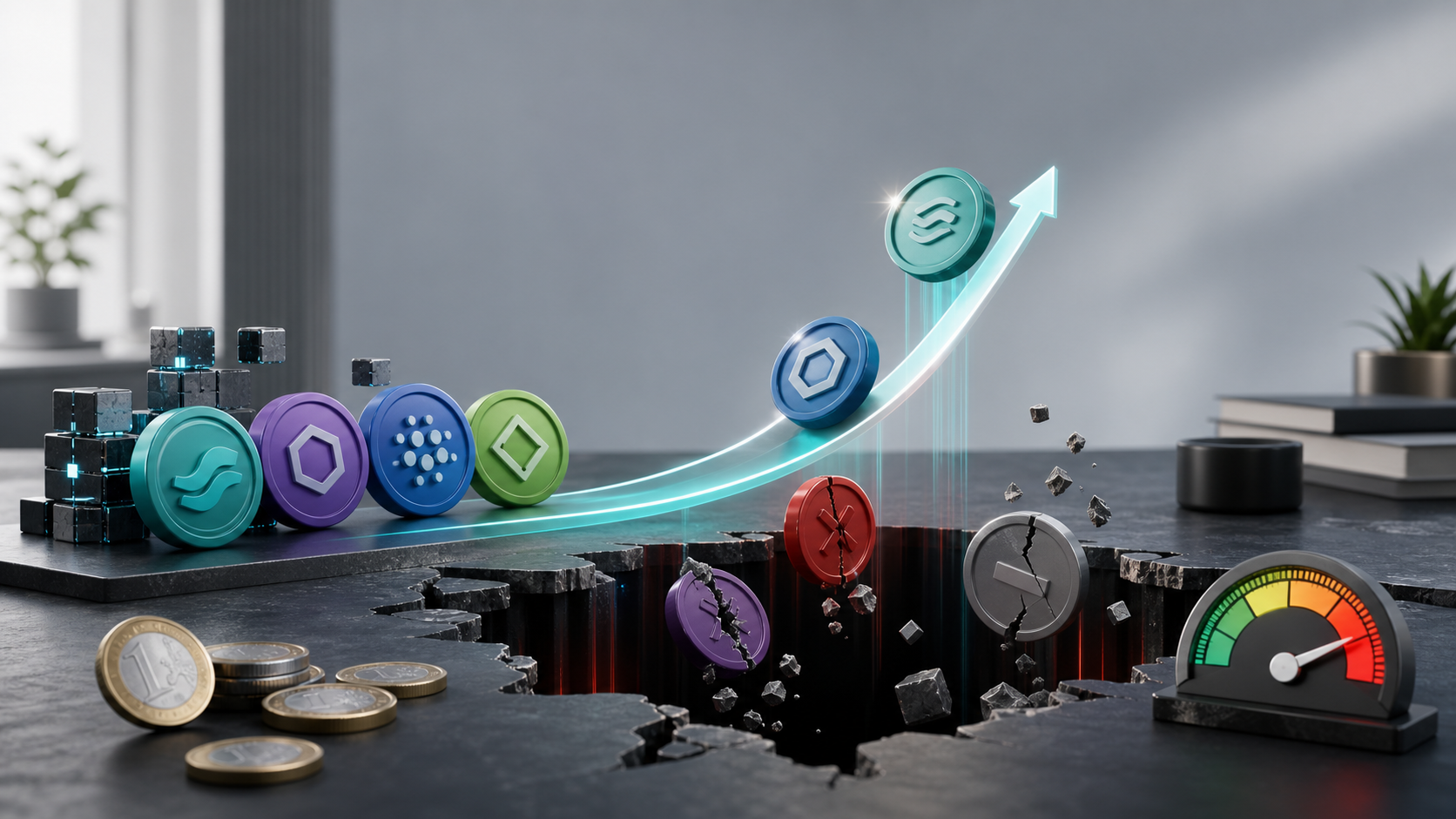
Altcoins promise more room, but more weak points too
Altcoins are crypto assets outside Bitcoin, from large networks to small tokens with short histories. For crypto-curious readers, altcoins can sound attractive because a smaller project could rise faster than an already large market. That same small scale can also mean confidence, liquidity and development disappear quickly.
This article is general education, not personal financial advice and not a recommendation to buy crypto. Investor.gov warns that crypto assets can be highly volatile and that investors should consider fraud, unclear information and trading platform risks. The SEC also stresses that many crypto offerings do not provide the same protections as registered securities.
The practical question is not only which altcoins sound exciting. The better question is which altcoins carry a risk that fits your cashflow, buffer and time horizon. If a loss would touch rent, tax, healthcare, debt payments or an emergency fund, the position is probably too large before the story even starts.
The upside story is often narrative driven
Many altcoins are sold through a story: faster, cheaper, greener, more scalable, more private, more community-led or more useful for a new application. Sometimes real technical work sits behind that story. Sometimes the story mainly gives buyers a reason to believe the next wave of enthusiasm will arrive.
A narrative is not cashflow. A token can attract attention while the network has few real users, little revenue and few independent developers. Altcoins can then move on expectations rather than proven use. That makes price sensitive to news, social media, influencers and exchange listings.
For a household, that distinction matters. Bills cannot be paid with a future adoption story. Altcoins deserve a different mental category than a broad diversified investment. Treat them as speculative risk capital, not as an automatic shortcut to wealth building.
Liquidity turns paper gains into real exits
With altcoins, liquidity means whether you can buy or sell without moving the price sharply. A token can rise strongly on screen, but if there are few buyers when you want to leave, the paper gain is fragile. Low liquidity widens the gap between the displayed price and the price you can actually execute.
That is why small markets can mislead. A few trades can lift the price, and one larger sale can push it back down. In thin order books, an investor may think there is plenty of value while the real exit is narrow.
FlowyZ thinks in dates and money jobs. That helps here too: when would you need to sell if something changed? Would there be enough volume then? What happens if many holders want the same exit at once? Liquidity is not a detail. It is a core risk.
Concentration can grow quietly
Many altcoins have concentrated ownership. Founders, early investors, foundations, exchanges or market makers may hold a large share of the supply. Even when a website promises decentralisation, real power over supply and selling pressure may be concentrated.
Concentration does not automatically mean fraud. Early projects often need a treasury for development. But concentration changes the risk profile. If large holders sell, if lock-ups expire, or if reward schedules add supply, the price can suffer while retail buyers understand the story too late.
Look beyond market capitalisation. Ask how many tokens circulate, how many arrive later, who controls those decisions and what incentives large holders have. With altcoins, token distribution can matter as much as technology.
Smart contracts add technical risk
Some altcoins run in or around smart contracts. That can enable new applications, but it adds code, oracle, bridge and governance risk. A contract bug, hacked bridge or badly controlled admin function can damage value even when the wider crypto market did nothing wrong.
The SEC and Investor.gov warn broadly that crypto assets can involve platform, wallet, hack, fraud and protection risks. With altcoins, protocol-specific complexity often sits on top. Reading a white paper is not the same as understanding code, audits and upgrade rights.
For beginners, one boundary helps. If you cannot explain how the token captures value, which smart contracts are critical and who can change them, you probably do not understand the risk well enough. That does not ban altcoins, but it labels the choice as speculation with limited control.
Exchange listings are not quality stamps
A token on a familiar exchange can feel safer than a token on a small platform. A listing still does not prove that a project is durable, fairly valued or suitable. Exchanges have their own incentives, earn from trading and can later remove tokens.
Investor.gov tells investors to be cautious with crypto asset securities and claims about return or safety. An exchange listing does not change that foundation. It mainly means there is a trading venue at that moment. It says less about code quality, distribution, regulation or long-term demand.
Treat listings as access, not evidence. Ask what happens if volume dries up, if an exchange pauses withdrawals, or if a token is no longer supported. In altcoins, platform risk and market risk often overlap.
Regulation can change the story
Altcoins do not operate outside supervision. A token's legal status, how it was issued and what was promised about returns can matter. The SEC publishes separate information on crypto assets and warns investors that some offerings may fall under securities laws.
A retail investor does not need to become a lawyer, but humility helps. A project that looks freely tradable today can face enforcement, delisting or country-specific limits tomorrow. That can hit liquidity, confidence and price at the same time.
Regulatory risk is difficult because it can feel binary. Nothing appears to happen for a long time, then one announcement changes the market. In smaller altcoins, that shock can be stronger than in larger, more established assets.
Failure risk is normal, not unusual
With altcoins, the possibility that a project simply fails is normal. Developers leave, communities go quiet, a competitor wins, incentives dry up or the product finds little real demand. Failure is normal in traditional startups; it is sometimes forgotten when tokens trade every day.
Daily trading can create the illusion that a project is mature. A price feed is not a business model. Many altcoins do not provide a clear claim on revenue, shareholder rights or cashflows to token holders. Value then depends mainly on expectation, use and a scarcity story.
That calls for position control. An investor who treats altcoins as a basket of small venture-like speculations expects many failures. An investor who treats each token as an almost certain winner is probably taking too much concentration risk.
Your cashflow defines the maximum damage
The household base comes first. Emergency buffer, fixed costs, annual bills, taxes and known goals take priority over altcoins. Crypto bought with stress money makes every decline more personal. Volatility stops being an abstract market risk and becomes a monthly planning problem.
A practical rule is to define the maximum loss before buying. Not the amount you hope to make, but the amount you can lose without damage. If that amount is zero, the right position is zero. If the amount is small, the upside story does not need to be made larger.
FlowyZ can help by separating the speculative amount from bills and buffers. Then you can see whether altcoins truly come from free space. A position that fits only in a perfect month usually does not fit a real household.
Diversification is not the same as many tokens
Buying ten altcoins can feel diversified. Those ten positions may still depend on the same drivers: crypto sentiment, exchange liquidity, risk appetite and social media attention. If the whole category falls, having different token names may help little.
Real diversification needs risks that do not all move together. Inside crypto, that is harder than it looks. A DeFi token, gaming token and infrastructure token can all fall together when investors want less risk. Altcoins can look varied inside the category while remaining concentrated from the outside.
For the broader principle, read the FlowyZ article on index funds, individual shares and diversification. This article does not repeat that foundation, but it uses the same sober lesson: diversification should reduce risk, not merely add more names.
A checklist before buying
Use a short checklist before altcoins receive money. One: is the emergency fund fully separate? Two: is this money unnecessary for several years? Three: do you understand why the token would have value? Four: do you know liquidity and trading volume? Five: do you know who owns large amounts?
Six: are there lock-ups, unlocks or inflation? Seven: are smart contracts, bridges and admin rights understandable? Eight: does the project depend on one narrative or influencer attention? Nine: do you know in advance what event would make you sell or do nothing? Ten: is the maximum loss acceptable?
If several answers are weak, waiting is not a missed opportunity. It is risk management. Altcoins will probably still exist tomorrow. A better understood risk is more valuable than a faster purchase.
The sober conclusion
Altcoins can carry higher upside stories because they are smaller, newer and more narrative-sensitive. The same features also raise failure risk. Thin liquidity, concentrated ownership, smart contract errors, platform risk, regulation and hype can reinforce each other.
That is why altcoins fit only in a small, deliberate and loss-tolerant part of a financial plan. They do not replace a buffer, broad diversification or long-term discipline. They do not solve cashflow stress. And they do not become safe because other people sound excited.
The best posture is curious but strict. Understand the story, then test the weak points. Measure the position against household reality. If the risk feels acceptable only while the price rises, the risk is not understood.