
Grocery budget without shame: realistic ways to lower food costs
A grocery budget works better with stock checks, meal anchors, less waste and realistic weekly amounts.
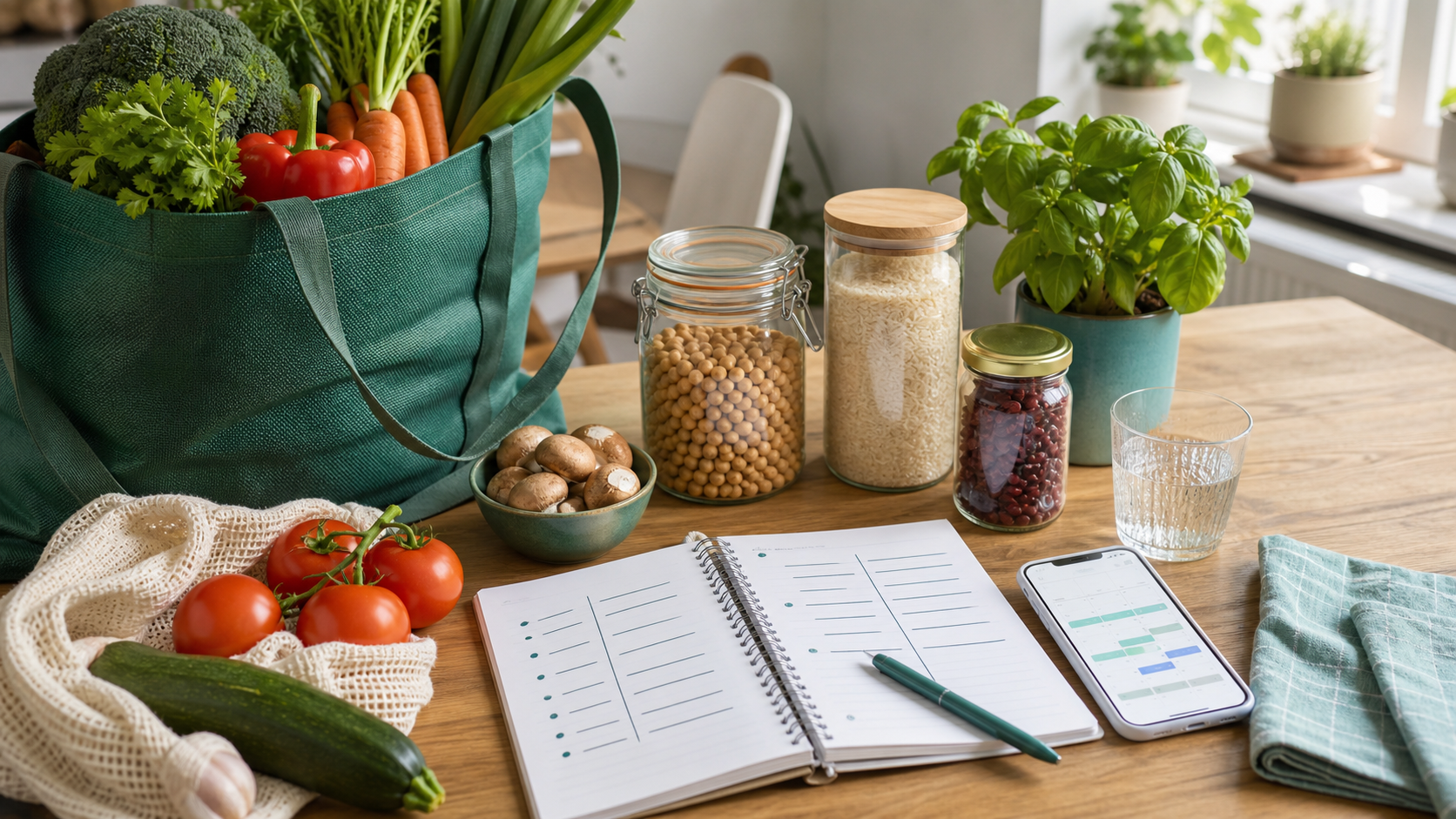
A grocery budget can become emotional quickly. Food is necessary, but it is also habit, family, culture, energy, convenience and sometimes comfort. That is why cutting grocery costs rarely works when the conversation starts with blame. If the only message is that spending must go down, the result is often shame, conflict or a plan so strict that it breaks after two weeks.
A grocery budget becomes easier to lower when you treat it as a routine problem. Not: who bought the wrong thing? Better: which groceries come back every week, which meals rescue busy days, what is already in the house and where does food disappear unused? Those are practical questions. They reduce costs without turning food into a daily test.
Nibud, the Dutch household finance institute, includes groceries in household spending and offers example amounts to help people understand costs. The Dutch Nutrition Centre explains that buying, cooking and storing food more carefully can reduce food waste. Put together, the message is simple: your grocery budget becomes more realistic when you rely less on willpower and more on stock, planning and timing.
This article is not about perfect budget categories. It is about a workable grocery routine for households that notice supermarket prices, busy weeks and wasted food taking too much room.
Grocery budget without shame starts with reality
A grocery budget starts with what actually happens. Not with an ideal number from someone else, not with the strictest month you once managed and not with an online challenge. Start with three normal months. Add up supermarket spending, market purchases, drugstore items, meal delivery, lunch outside the home and small in-between purchases either separately or together, as long as you are consistent.
Then comes the most important step: delay judgement. A high grocery budget can have many causes. The estimate may be too low. Children may be older. Convenience may have become more necessary during busy weeks. You may buy too many discount packs that later spoil. Snacks, cleaning products and personal care may all be hiding inside the same supermarket category.
If you look for guilt immediately, you learn little. If you look for patterns, you can steer. Notice which weeks are expensive, which shops create extra impulse purchases and which evenings usually end in takeaway or delivery. That is information, not a character judgement.
FlowyZ helps especially with timing. A grocery budget of 700 euro per month feels different when most of it is spent in the first two weeks than when it is spread more evenly through the month.
Build a base list before checking offers
Offers can help, but they can also reverse the order. You first buy what looks cheap and only afterwards decide what to do with it. A stronger grocery budget starts with a base list: which products does your household really use every week?
Think of breakfast, bread, fruit, vegetables, dairy or alternatives, rice, pasta, potatoes, pulses, eggs, meat or fish if you eat them, herbs, oil, coffee, tea, lunch items and simple freezer products. The list is personal. A family with teenagers buys differently from someone who often has lunch at work.
Nibud suggests weekly planning and checking supermarket leaflets as ways to save. The order matters. First the plan, then the leaflet. Otherwise the leaflet gets too much control over your kitchen.
A base list also shows which offers are useful. A discount on products you always use, can store and actually finish is helpful. A discount on something that only looks attractive because it is on offer is not a saving. It is stock with a question mark.
Use the base list for two or three weeks without ambition. Then you can see which products are truly needed and which were mostly habit.
Plan meals as anchors, not a prison
Meal planning can sound as if every meal must be fixed in advance. It does not need to be that rigid. For a practical grocery budget, three or four meal anchors are often enough. Choose reliable meals that fit your week: a quick pasta, rice dish, soup, wraps, potatoes and vegetables, curry, omelette, salad with bread, or a leftovers night.
The goal is not perfect cooking. The goal is to avoid solving dinner from scratch every day at five o'clock. That moment is expensive. Convenience wins, and convenience is not wrong, but unplanned convenience is usually more expensive than planned convenience.
Create two lists. One normal week list with meals you like, and one emergency list for busy days. The emergency list can be simple: freezer vegetables with rice and egg, pasta with tomato sauce, soup and bread, wraps with beans, or a meal from the freezer. An emergency meal is not a failure. It is a cheaper alternative to panic shopping.
Also plan honestly how many evenings you cook at home. If Friday often becomes takeaway, include that instead of pretending you will cook from scratch. Honest planning lowers waste.
Check stock before buying
The Dutch Nutrition Centre names checking stock and making a shopping list as practical steps against waste. It is also a money step. Many households do not only buy too much food. They buy duplicate food: another pack of wraps, another bag of rice, another jar of sauce, another yoghurt while two are already in the fridge.
Keep the stock check short. Before shopping, look at the fridge, freezer and pantry. Write down what needs using first. Build meals around those products. Half a bag of spinach, an open jar of pesto, ripe bananas or bread in the freezer are not problems once they have a plan.
A fixed order helps:
- first check what needs using soon;
- then choose meals that fit those products;
- then add what is missing;
- only after that look at offers.
This order lowers the grocery budget without feeling severe. You are not buying less because you must. You are buying more precisely because you know what has already been paid for.
In FlowyZ, groceries can be planned as weekly amounts. If the first week is lower because you use stock, you can immediately see what room that creates later in the month. Read cashflow planning vs budgeting if you want the grocery budget to sit next to fixed bills and timing.
Cut waste before cutting portions
Saving on food is sometimes confused with eating less or making meals smaller. That does not have to be the first step. Waste is often the kinder place to begin. The Dutch Nutrition Centre explains that smart buying, cooking the right amount and storing food well can help reduce food waste. Less waste lowers costs without anyone getting less food.
Start with the products that often go wrong in your household. Bread can go into the freezer in portions. Leftovers can become lunch. Vegetables that are getting tired can go into soup, sauce, omelette or stir-fry. Fruit that is too ripe can go into yoghurt, oats or pancakes. Dairy mainly needs visibility and date order.
Do not make leftovers depend on inspiration. Choose a fixed leftovers route. Thursday leftovers night, Friday lunch boxes, Sunday soup or a freezer week once a month. A routine beats good intentions.
Food safety still matters. Use your senses where appropriate, but respect products with stricter use-by dates. Saving money is not the same as taking risks with food that may no longer be safe.
Every euro of food that is not thrown away does not have to be earned again.
Use store brands and fixed alternatives deliberately
A grocery budget often drops faster through fixed alternatives than through isolated actions. Choose five products where you can test a store brand or cheaper alternative without much loss. Pasta, rice, oats, canned tomatoes, cleaning products, frozen vegetables or yoghurt are common examples. Test calmly. If nobody notices a difference or the difference is acceptable, the saving returns every week.
Do not switch everything at once. Some products matter more to a household than others. Maybe a certain bread, coffee or cheese stays. That is fine. A shame-free routine chooses deliberately where quality matters and where it does not.
Compare per kilo, litre or piece. A large pack is not automatically cheaper if half of it spoils. A smaller pack can be more expensive per kilo but cheaper for a household that would otherwise throw food away. The real grocery budget is about what gets eaten, not only what the shelf price promises.
ACM ConsuWijzer explains that consumers should be able to see prices clearly, including taxes, and that prices must be shown on or near products. Use that information actively: look beyond the offer sticker and check the price per quantity and what you truly need.
Make offers less impulsive
Offers work best with rules. Without rules they can increase your grocery budget. Two for one is useful if the product stores well, belongs on your normal list and will be used within the month. It is less useful if it fills a cupboard with food that has no meal attached to it.
Use simple offer rules:
- buy extra stock only for products you already use;
- buy perishable offers only with a meal plan;
- do not add a second basket because you are already in the shop;
- keep bulk stock visible and check monthly whether it is shrinking;
- count offers inside the weekly amount, not as free extras.
Nibud names leaflets and offers as possible saving opportunities. The skill is to make offers serve your planning, not the other way around. An offer that later becomes waste did not create value.
Online shopping can help here, but only if delivery fees and extra impulses do not eat the saving. The benefit is that you can adjust the basket calmly and see the total before paying. In the shop, a calculator or grocery app can do the same job.
Give convenience a planned place
Many grocery budgets do not go off track because of luxury. They go off track because of tiredness. A busy day, a late meeting, a child coming home late, low energy: convenience becomes attractive. Shame does not solve that. Planning does.
Give convenience a planned place. Buy a few quick meals that are still cheaper than delivery. Soup, freezer vegetables, wraps, pre-cut vegetables, ready sauce, bread rolls or a simple oven meal can all have a role. Not every choice needs to be the cheapest option. The question is whether it prevents a more expensive emergency.
This matters for households with children, care tasks, shifts or limited cooking energy. A realistic grocery budget reflects the week as it is, not the week you wish you had.
Plan lunch and snacks too. Many small purchases outside the supermarket do not feel like groceries, but they use the same room. A few easy lunch options at home can save more than an elaborate dinner plan.
Steer weekly, review monthly
A grocery budget becomes calmer when you steer it week by week. Set a monthly amount and divide it into weekly amounts. The weeks do not need to be equal. A stock-up week may be higher. A leftovers week may be lower. The point is that you see earlier when the month is moving out of balance.
Then review monthly. Was the amount too low, or was the routine messy? Were there guests, holidays, sickness or price increases? Did drugstore items, cleaning products or pet food sit in the same category? If circumstances were different, the grocery budget may need to be different too.
FlowyZ helps because groceries do not exist separately from rent, energy, subscriptions and annual bills. A more expensive grocery week is easier to understand when you see which other payments fall in the same week. Sometimes the problem is not the monthly amount, but the order.
After three months, you have a more realistic norm. Not perfect, but usable.
From grocery budget to calmer food choices
A lower grocery budget usually does not come from one dramatic intervention. It comes from small routines that repeat: check stock, use a base list, choose meal anchors, reduce waste, filter offers and plan convenience before the week becomes busy.
The shame-free question is always: what makes the next grocery round easier and a little cheaper? Not: how do I suddenly become a different person? A household that plans realistically needs less discipline in the supermarket.
Use FlowyZ to place the grocery budget inside the month. Set weekly amounts, plan bigger shopping moments and check what is truly free after fixed costs. Then groceries stop being a separate guess and become part of cashflow.
A grocery budget without shame is not a strict diet for your wallet. It is a way to organize food, money and energy more honestly. That makes saving less harsh and the month more predictable.
Sources and further reading: Nibud on household spending, Nibud on saving money, Dutch Nutrition Centre on wasting less, Dutch Nutrition Centre with 8 food waste tips, ACM ConsuWijzer on product prices.