
Holiday budget: plan the trip without a cashflow hangover
A holiday budget helps households plan deposits, card spending and regular bills before and after the trip.
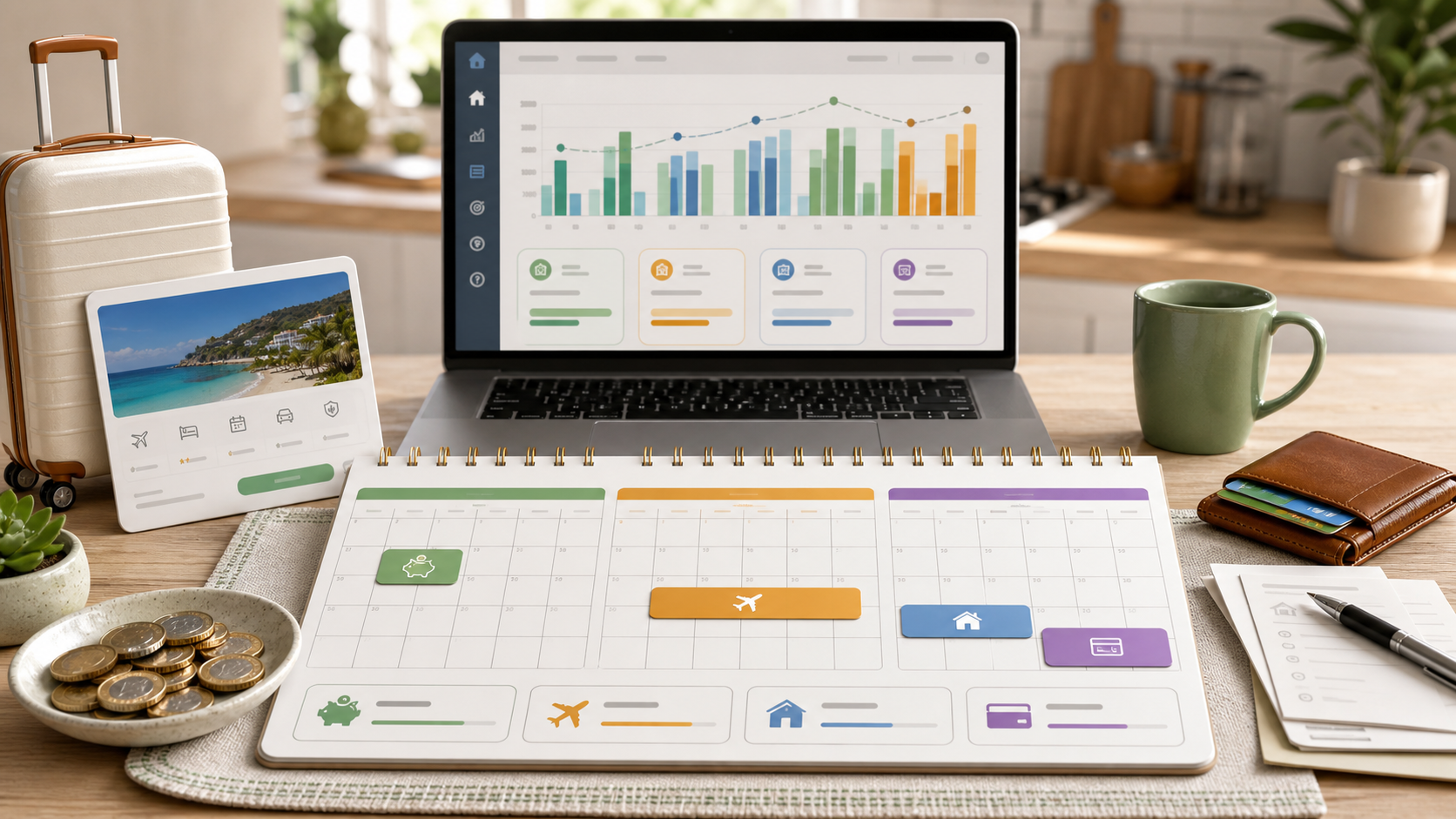
Holiday budget starts three months earlier
A holiday budget is not only about the week away. It is also about the months before and after. Before departure you may pay deposits, travel insurance, passports, clothes, parking, pet care or an extra grocery run. After returning, card charges, fuel, tolls, postponed bills and normal fixed costs arrive together.
Nibud advises households to decide in advance what they can or want to spend on a trip. That sounds obvious, but many people only budget the travel price: transport, accommodation and perhaps a rental car. A real holiday budget also adds timing. When does the deposit leave? When is the final payment due? Which card charges land after the trip?
This article treats a holiday budget as a cashflow plan, not a harsh restriction. The aim is that the trip stays enjoyable without damaging the month before or the month after. A good holiday budget protects normal life.
Start with the hard booking costs
List the costs that are fixed or close to fixed: deposit, final payment, accommodation, transport, luggage, cancellation cover, travel insurance, tolls, parking, pet care and documents. This part of the holiday budget is not creative. It is the cost of saying yes.
Add the payment date behind every amount. A 1,800 euro trip can feel fine if you only look at departure, but become stressful when a 900 euro final payment falls in the same month as school costs, healthcare, car insurance or local taxes. The holiday budget must work month by month.
Use three columns in FlowyZ: before departure, during the trip and after returning. Then you can see whether the booking squeezes the regular month. If the month before departure turns negative, the trip is not automatically impossible, but the choice or payment timing needs another look.
Protect regular bills first
A holiday budget should not treat regular bills as leftovers. Rent or mortgage, energy, health insurance, childcare, subscriptions, groceries, fuel and minimum repayments continue while you are away. Some variable costs may fall for a week, but the base month still exists.
Create a normal monthly plan before adding the holiday budget. Then insert the trip. If the plan only works because you make ordinary spending unrealistically low, the holiday budget is too optimistic. The holiday has to fit the household you actually have.
Also check annual costs. The earlier article about planning annual bills covered costs that do not appear every month. A holiday budget should sit next to those peaks, not on top of them. Otherwise the trip uses money that already had a job.
Take small fixed habits seriously too. A sports subscription, phone bill, childcare day or insurance premium may not look large alone, but together they decide how much room is real. Leave those lines exactly where they will be collected, then judge the trip against the actual month.
Deposits are not a small detail
Many trips feel affordable because the first deposit is small. That can be useful, but it moves the pressure forward. The real holiday budget should treat the deposit and final payment as one package. Put the later payment in the right month immediately.
Use a firm rule: book only when the final-payment month still looks healthy. If future you has to solve the gap, that is not planning. It is hope with a payment link. A holiday budget brings that moment forward.
For group trips this matters even more. Agree who advances money, when everyone pays and what happens if someone cancels. A household can feel tight simply because it temporarily pays for others. That belongs in the holiday budget too.
Make card spending visible after the trip
Credit card and debit card spending can weaken a holiday budget because the timing is delayed. During the trip, a restaurant, activity or extra taxi feels small. At home the charge arrives together with groceries, work routines and regular bills.
Create a separate card-spending line in the holiday budget: expected payments after returning. Use a daily guide for food, activities and small purchases. Not because every euro of fun must be controlled, but because the post-holiday month otherwise receives the real bill.
Check the card collection date before departure. Does it fall just after payday, just before payday or in a month with other peaks? That timing determines whether card use is comfortable. Without the card date, the plan is incomplete.
Flexible choices keep the trip affordable
A holiday budget becomes stronger when not every choice is sacred. Flexible travel days, a shorter stay, self-catering, shoulder season, train instead of rental car, cheaper accommodation, less luggage or a local day trip can reduce costs without ruining the holiday.
Nibud points out that holiday costs depend on destination, season, length, transport, accommodation and food. Those are exactly the levers in your holiday budget. Put two alternatives beside your first choice: comfortable, lighter and minimum-fun.
Decide what really matters. Maybe sea view is optional, but air conditioning is not. Maybe one calm week beats ten tense days. A holiday budget works best when money decisions are tied to real priorities.
Make those priorities concrete before opening booking sites. Write down three things that make the trip worthwhile and three things that are only nice extras. Comparing options becomes calmer because you are choosing between necessary, pleasant and optional rather than cheap and expensive.
Keep emergency savings separate from the holiday budget
Nibud describes a financial buffer as money for unexpected, larger and necessary expenses. A trip can matter for rest, but it is usually not unexpected and not necessary in the same way as a broken appliance, car repair or health bill. Do not casually take the holiday budget from the emergency buffer.
That does not mean savings can never be used. It means you decide which part is holiday money and which part remains emergency money. If the buffer becomes too small after booking, the holiday budget should be reduced or the trip delayed.
Use a simple test: if the fridge broke tomorrow, could you handle it without borrowing back from the holiday card? If not, the holiday budget is probably too high for the current situation.
Plan the return month separately
Many households stop planning once the suitcases close. The return deserves its own line. The first week back often brings extra groceries, laundry, school items, fuel, empty pantry shelves and a lower balance than expected. Put that transition into the holiday budget.
Make the post-holiday month boring and roomy. Avoid extra large purchases in the first two weeks after coming home. Let card charges, groceries and fixed bills land first. Then you can see whether there is real room.
This is psychologically useful too. After a trip, nobody wants to return straight into financial correction mode. A holiday budget that includes the return gives the household space to restart without shame or panic.
Use holiday pay deliberately
Holiday pay can be a useful base for the holiday budget, but it is not automatic free money. Sometimes it already has several claims: overdue bills, clothing, school costs, healthcare, maintenance or rebuilding savings. Put every claim beside the trip before booking.
Split holiday pay in three steps. First necessary arrears or buffer repair, then the holiday budget, then extra comfort. That order prevents a good moment in May from becoming pressure in September.
If you use part of holiday pay for the trip, write down what remains for ordinary months. The mistake is often not the holiday itself, but forgetting that the same euro had other jobs too.
For irregular income, add one more check. Look beyond the incoming payment and scan the next invoices, benefits, childcare, maintenance and school moments. A one-off boost can make the trip easier, but it does not repair a structurally tight month.
Build a holiday budget you can use while away
A holiday budget is not finished when the booking is paid. Make a simple daily guide for food, drinks, activities and small purchases. Add a separate line for one-off items such as museums, parking, excursions, souvenirs or extra fuel.
Do not use a system nobody will open. A shared note, a FlowyZ entry or a simple card limit is enough. The holiday budget should help during the trip, not spoil the mood. Agree when to adjust, for example halfway through the holiday.
Leave a small free margin. Without margin, every ice cream feels like a mistake. With margin, the plan stays practical and human. The point is not to block pleasure; it is to protect the return month.
Agree how to handle unexpected nice chances. A boat trip, market or extra dinner does not have to be forbidden, but it should come from somewhere. Choose deliberately: fewer souvenirs, a simpler lunch or a cheaper activity later in the week.
From travel wish to calm cashflow
Start with an empty holiday budget. Put the departure month, previous month and following month next to each other. Add booking costs, deposits, card charges, daily spending, regular bills and return costs. Then check whether the buffer remains intact.
If it does not fit, that is not failure. It is information. Move the date, choose cheaper accommodation, shorten the stay, pay less upfront or build up longer. A flexible travel plan creates options before debt or stress becomes necessary.
That turns holiday planning into a calmer cashflow decision. You choose deliberately, pay on time and return without damaging the next month.
After returning, do a short review. Which costs were forgotten, which choices were worth it and which payment arrived at an awkward moment? Keep those notes for the next trip. Each year becomes easier because you no longer estimate from zero.