
Income drops for three months: what to do first
When income drops, a temporary order helps protect essentials, use buffers carefully, contact creditors and set decision points.
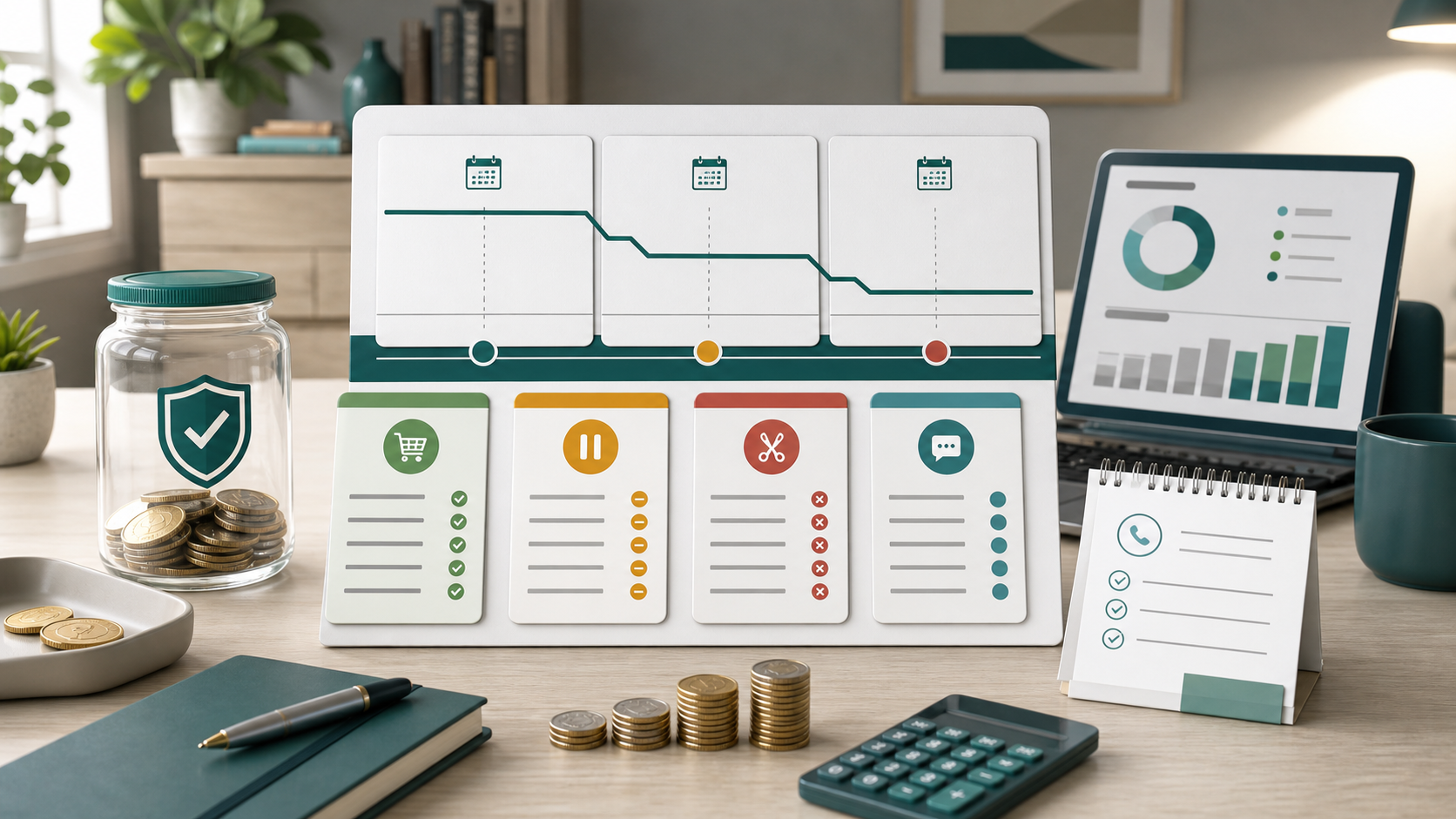
When income drops, order matters
When income drops for three months, money becomes both emotional and technical. Overtime may disappear, a client may pay late, a project may stop, or a small business may slow down. The expensive mistake is waiting until the third month is already over. A drop in income needs a temporary order right away.
Nibud advises people with early money problems to create an overview and seek help when payments become difficult. CFPB materials for people behind on bills use the same practical line: make an action plan, look at income and spending, and prioritize bills. That is the frame here.
This article is not about normal irregular-income planning. It is triage for the moment when income drops and you need to look three months ahead. The aim is to reduce damage, protect essentials, speak to creditors before bills escalate, and decide when the temporary plan is no longer temporary. When income drops, order matters more than perfect forecasting.
Build a three-month map
Do not start by cutting expenses by instinct. Put three months side by side. Write expected income, certain income, possible income and a zero scenario. If income drops because work is lower or a contract is gone, use the amount that is reasonably certain, not the amount you hope will arrive.
Then add the dates. Rent or mortgage, utilities, health costs, taxes, childcare, leases, software, insurance, subscriptions, groceries, transport and business minimums all get a date. The CFPB bill calendar focuses on comparing bill timing with income timing.
The three-month map shows where income drops and where the pressure really lands. Month one may still be manageable, month two tight and month three impossible. Or the first week may be the problem because many fixed costs leave before new money arrives. Without a map, every bill feels equally urgent. When income drops, the map turns worry into dates.
Income drops: separate certainty from hope
When income drops, optimism can become expensive. A proposal is not a payment. A verbal promise is not cash. An invoice that will probably be paid is useful for scenarios, but not for bills due this week. Keep uncertain income separate until it arrives.
Households can use the same split. A bonus, tax refund, sale of unused items or family help may create breathing room, but it should not carry the basic plan. Build the emergency plan on money that is almost certain. Extra money can soften the plan later.
For small teams this matters even more. A deal in negotiation cannot pay payroll. When income drops, treat receivables, pipeline and renewals as separate layers. FlowyZ-style planning helps because every amount gets a date and a confidence level, so hope does not disguise itself as cash. When income drops, certainty is a budget category.
Rank expenses in four layers
The first layer is protection: housing, basic utilities, necessary care, basic food, work transport, legal obligations and costs that directly protect income. This layer comes first because missed payments can create fast, serious damage.
The second layer is preservation: insurance you really need, basic phone and internet, childcare that makes work possible, bookkeeping, necessary software and suppliers that keep operations running. When income drops, you reduce this layer carefully, but you do not break it blindly.
The third layer is pauseable: streaming, convenience spending, restaurants, non-essential subscriptions, upgrades, courses, test campaigns, inventory that can wait and luxury transport. The fourth layer is delay or negotiation: debts, lower-priority installments and contracts where a temporary arrangement may be possible. Ranking prevents random cuts.
Protect housing, work and health first
A small bill can be loud, but the biggest consequences often sit with housing, work and health. Rent or mortgage needs early contact if payment may fail. Nibud stresses contacting the mortgage provider when arrears appear. Waiting usually makes options smaller.
Work tools also deserve protection. For a freelancer, internet, laptop repair, transport or accounting software may matter more than an old consumer debt that can temporarily be handled through an arrangement. For a household, childcare may be needed to keep income coming in.
Health should not automatically enter the cutting round. Medication, necessary care, insurance and deductibles can have hard consequences. When income drops, the assignment is not just to spend less. It is to compare the damage caused by each unpaid euro. That is why health gets a named place when income drops.
Pause fast, but not chaotically
The best temporary saving works quickly and causes little damage. Pause extra subscriptions, delivery convenience, impulse buys, luxury groceries, non-essential trips, paid upgrades and projects without immediate return. Do this in one planned round, not in a new panic every evening.
For each pauseable expense, write three things: amount, cancellation date and restart rule. The restart rule matters. When income drops, a pause can either become unnecessary long-term friction or return too early. For example: restart only after two months of positive basic margin.
Small teams can use the same discipline. Stop trial subscriptions, duplicate tools and optional campaigns. Keep track of the owner and the risk. A quick saving that breaks client delivery is not a saving; it is a new problem.
Call creditors before silence takes over
When income drops and a payment probably will not work, contact the creditor before the due date passes. The CFPB says not to ignore bills you cannot pay and to call the person or company you owe. The call may feel uncomfortable, but silence makes recovery harder.
Make the conversation concrete. Say what amount you can pay now, when you will follow up and why income drops. Ask about postponement, a payment plan, a temporarily lower amount, a pause on fees or interest, or a changed due date. Confirm agreements in writing. When income drops, a written agreement is part of the cashflow plan.
Do not use a long explanation as a substitute for a plan. A creditor usually needs an honest proposal more than a dramatic story. Keep the name, date, agreement and proof. If the conversation becomes difficult, look at Nibud resources, municipal debt help or certified advice.
Use the buffer with a rule
A buffer exists for shocks, so income drops is a legitimate reason to use it. But without a rule, the buffer can disappear into ordinary spending. Decide in advance what the buffer may cover: essential bills, necessary care, preserving work and agreed bridge amounts.
Also set a floor. For example: below a certain balance, you ask for help, sell something, stop a contract or request a formal arrangement. A floor prevents waiting until the buffer is zero. Nibud's money-problem guidance points people toward help before the problem grows.
For freelancers, buffer use should connect to business action. If income drops because work is lower, each buffer withdrawal should sit next to a sales action, invoice follow-up or cost action. The buffer buys time. Time without decisions gets expensive.
Set monthly decision points
A three-month plan needs decision points. End of month one: did the pause round work, have creditors been contacted, and is the new income number real? End of month two: is recovery visible or is the drop structural? End of month three: must housing, work, team size or contract level change?
Without decision points, a temporary problem rolls forward. Month one is paid with buffer, month two with delay and month three with panic. When income drops, each month needs a clear question: what do we do if this continues for one more month?
Write decision points in plain language. If no project is signed by the fifteenth, we cancel this tool. If two invoices are still unpaid, we call both clients. If the buffer falls below the floor, we contact the municipality, adviser or debt counselor.
Watch payment order and direct debits
Direct debit is useful in calm months, but it can become risky when income drops. Check which amounts leave automatically before essential money is safe. An automatic payment to a low priority bill can get in the way of rent, care or groceries.
That does not mean you should blindly block everything. Blocking payments can create fees, contract problems or admin work. Where possible, move due dates, set reminders or temporarily make manual payments for bills that require a deliberate choice.
The CFPB bill calendar is useful here: put due dates and income dates beside each other. In FlowyZ, the same idea shows which week turns red. When income drops, timing can matter as much as the amount.
Small teams: runway over pride
For a small team, three months of lower revenue is not a moral judgment. It is a runway question. How many months of cash remain when income drops, which costs are committed, which customers are certain, and which choices protect delivery?
Rank team costs with the same discipline. Payroll, taxes, core suppliers and client delivery come first. Experimental marketing, nice-to-have tools, events, outside advice and expansion plans come later. Discuss this early with co-founders or team members; surprises damage trust.
Make sales and collections operational too. Which open invoices get follow-up today? Which customers can prepay without creating unhealthy dependence? Which projects have scope that releases cash sooner? When income drops, the action agenda must sit next to the cost agenda.
When help is the logical step
Asking for help is not a final failure point. It is logical once essential bills no longer fit, several arrangements are needed at the same time, collection letters arrive, you avoid mail, or the buffer is close to empty. Nibud points people with money worries toward free and anonymous help through Geldfit and toward local government support.
In the Netherlands, municipalities can help with debt and money worries. For legal or complex debts, specialized help is sensible. For entrepreneurs, a bookkeeper, business debt support or sector-specific advice may be needed. Do not wait until every bill is already late.
The CFPB also points to credit or debt counseling when a payment plan is needed. The core lesson travels well: when income drops and not all obligations can be paid, an early organized request for help beats scattered emergency payments.
Use FlowyZ without turning this into a pitch
FlowyZ can make this process easier because months, dates and amounts become visible. Enter the lower income in month one, two and three. Put fixed costs on real dates. Mark pauseable costs and record creditor agreements outside your head.
Use scenarios: normal recovery, cautious recovery and no recovery. When income drops, you do not need a perfect budget. You need a map that shows when action is needed. The existing articles on cashflow buffer and emergency fund versus cashflow buffer connect well with this layer.
The most important habit is a weekly check. Not to punish yourself, but to make decisions before dates make them for you. An income drop does not always ask permission. The order of your response is still yours to choose.
Summary: the first 48 hours
When income drops, use the first 48 hours for visibility. Build the three-month map, separate certain income from hope, rank expenses, protect housing, work and health, pause low-damage costs and call creditors where payment is uncertain.
Use the buffer with a rule and decide in advance when help is needed. Speak with housemates, a partner, co-founder or team before everyone builds separate assumptions. Write agreements down. Set the next review date before the next bills arrive. When income drops, the review date protects the plan.
Three months of lower income does not require perfect forecasting. It requires an order that limits damage. When income drops, the first clear action often beats the best spreadsheet that is finished only after the crisis.